
Steinbeck's Tortilla Flat tackles transactional relationships.
Steinbeck's retelling of Arthurian legend feels like Cannery Row from a more calculating angle.

To see this book review in its full visual glory, read it on the book blog I’ve been running since 2011. (I know—how vintage!) Still, I’m glad you’re reading in any format, so the full text is below:
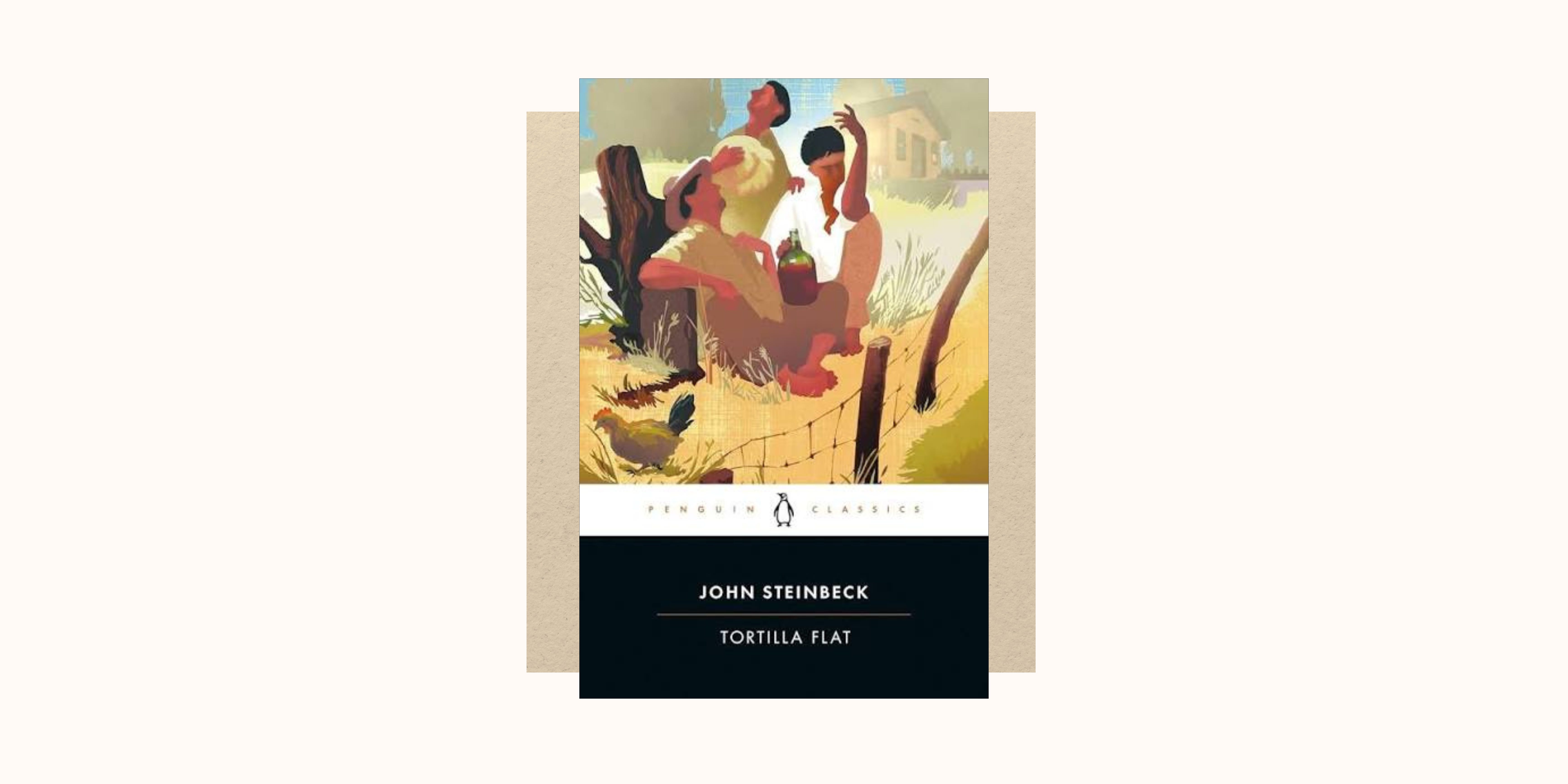
Book: Tortilla Flat by John Steinbeck
Release Date: 1942
Publisher: Penguin Classics
Format: Paperback
Source: Bought
Originally Posted: June 2026

Adopting the structure and themes of the Arthurian legend, John Steinbeck created a "Camelot" on a shabby hillside above the town of Monterey, California, and peopled it with a colorful band of knights. At the center of the tale is Danny, whose house, like Arthur's castle, becomes a gathering place for men looking for adventure, camaraderie, and a sense of belonging—men who fiercely resist the corrupting tide of honest toil and civil rectitude.1
Why I Picked It Up
Nowadays, I save Steinbeck for special occasions. John Steinbeck is one of my favorite writers and is (unfortunately, in case you hadn’t heard the news) deceased—meaning I have a finite amount of new-to-me books to consume. Each day I tackle one is a treat, but I finish it with the dread and grief of knowing I have one less to get around to.
Recently, I’ve had to spend so much time on screens in a net-negative way; I have too much computer work chipping into my normal digital hygiene. On Saturday, I quite literally took a break to go run my fingers through the grass, and decided that was a prime occasion for a shorter read of his—something I could knock out in maybe two hours and enjoy. I always emerge from a book like that refreshed. So I picked up Tortilla Flat.
What It’s About
Steinbeck has some overarching themes I love to explore too—like phalanx, the dissolution of identity within a group—so I’m familiar at this point with the existential feel of his work, even as each explores a different facet of the human experience. The introductions to the Penguin Classics editions always do a good job with their overview, and I marked down some papers to visit later.
This one, Tortilla Flat, occupied a cultural position similar to some of the “escapism” fiction we’re enjoying now; publishers, agents, authors, and bookstores have noted that lots of readers grappling with the current weight of things, broadly, don’t want fiction that exacerbates that despair.
Certain genres—like cozies, romance, satire, and silly tones—are doing much better than they would normally within the current moment because people need a break. Supposedly, Tortilla Flat hit that exact release valve in the 1940s.
The book is also more allegorical in nature, a retelling of King Arthur and the Round Table. Like Peter Matthiessen was secretly obsessed with Bigfoot, Steinbeck’s schtick was an affection for Camelot, and I love seeing the way niche interests can pepper into an author’s work.
I also appreciated Steinbeck’s remorse for the cultural implications of his commentary, as the characters in Tortilla Flat were interpreted through the lens of some racial stereotypes. As he wrote in a quickly-yanked author introduction in a previous edition, he was disappointed by the ungenerous reading some of his readers applied to the characters and—for that reason—wished he hadn’t written about another race. Lots to chew on there, and I’d love to read some of the commentary there both for and against his depictions. (I can’t in any way speak to their validity or my impressions of whether or not that creative choice is justified, but I can choose to trust Steinbeck’s general intention.)
Anyway, the book itself centers around a character, Danny, who’s inherited two homes unexpectedly—the central conflict of the novel. He suddenly feels tied down, crushed by the weight of responsibility. (Landlord propaganda?, I joke.)
The tension reminds me some of Milan Kundera’s The Unbearable Lightness of Being, and the group dynamics are similar to Steinbeck’s own Cannery Row crew—with a few key differences.
Basically, the book follows Danny as he explores his newfound property with his friend and decides how to divvy it up, tracing the resentments and transactions and favors throughout Monterey as each party considers what’s in their best interest. (I personally think a ton about transactionalism and friendship and how measuring favors diminishes them, so that’s always a psychology that I love to unpack—because I find you can very easily tell who is constantly weighing you in a tit-for-tat way.)
Themes of Transactionalism
Danny decides to rent his other house to his friend Pilon, and Pilon then immediately despises Danny for charging him even as he admits it makes him feel less like he owes Danny personally, which he also resents. A favor like free housing is harder to vault over, and makes Pilon feel even more in debt. Still, the solution for both is to set up the dynamic and then completely ignore it i.e. Pilon doesn’t ever pay rent and Danny doesn’t come to collect it.
Now, what I thought was most compelling about Tortilla Flat was this idea of constant justification within all the friendships. Basically: each man—excepting Danny—hated owing anyone and tried to get out of it at all costs. They wanted certain perks, but didn’t want to pay for them but also didn’t want to receive them for free.
Instead, what they did was that they constantly convinced themselves they were evading pay, or stealing, or making a deceitful choice, for the ultimate good of the other person.
“Thus do the gods speak with tiny causes.”
That point is one that Steinbeck really hammers in (somewhat heavy-handedly) but was also such a specific dynamic I appreciated. Steinbeck’s precision in characterization has always been my favorite quality of his, illuminating the universal within the precise. Taking a relational dynamic (like a duality around favors) and dialing it up to 100 percent is so much more interesting than just specifying a static personality trait. (I think some about a point from Lisa Feldman Barrett’s How Emotions Are Made about how, in some cultures, a specific emotion must involve multiple people to be named. That’s what this feels like.)
David Foster Wallace and Franny and Zooey have both discussed transactionalism within the realm of kindness, and I think it’s such an interesting topic. For example: Pilon would feel bad about not paying Danny. He would convince himself that he would instead buy two dollars’ worth of wine with the rent money to share with Danny, because wasn’t that better company? And then he would run into someone else he’d rather drink with and justify it by saying his real kindness was keeping Danny from being hungover from this imaginary wine and imaginary evening. Really, him not paying rent is harm reduction!
The conclusions could feel pretty silly, but that was also the point: to show the slippery slope you can go down when operating within your own self-consciousness. I flashed back to a lot of the books I’ve been reading lately that have oscillated around this concept of effective altruism, which I’m not sure I believe is anything more than that exact dynamic replicated (still chewing on its complexity) and—in a modern cultural lens—that kind of “slippery slope” grip that our current economic problems have on us now. There’s a lot of language and power wrapped around “Well, if I don’t do it, somebody else will and that would be even worse!”
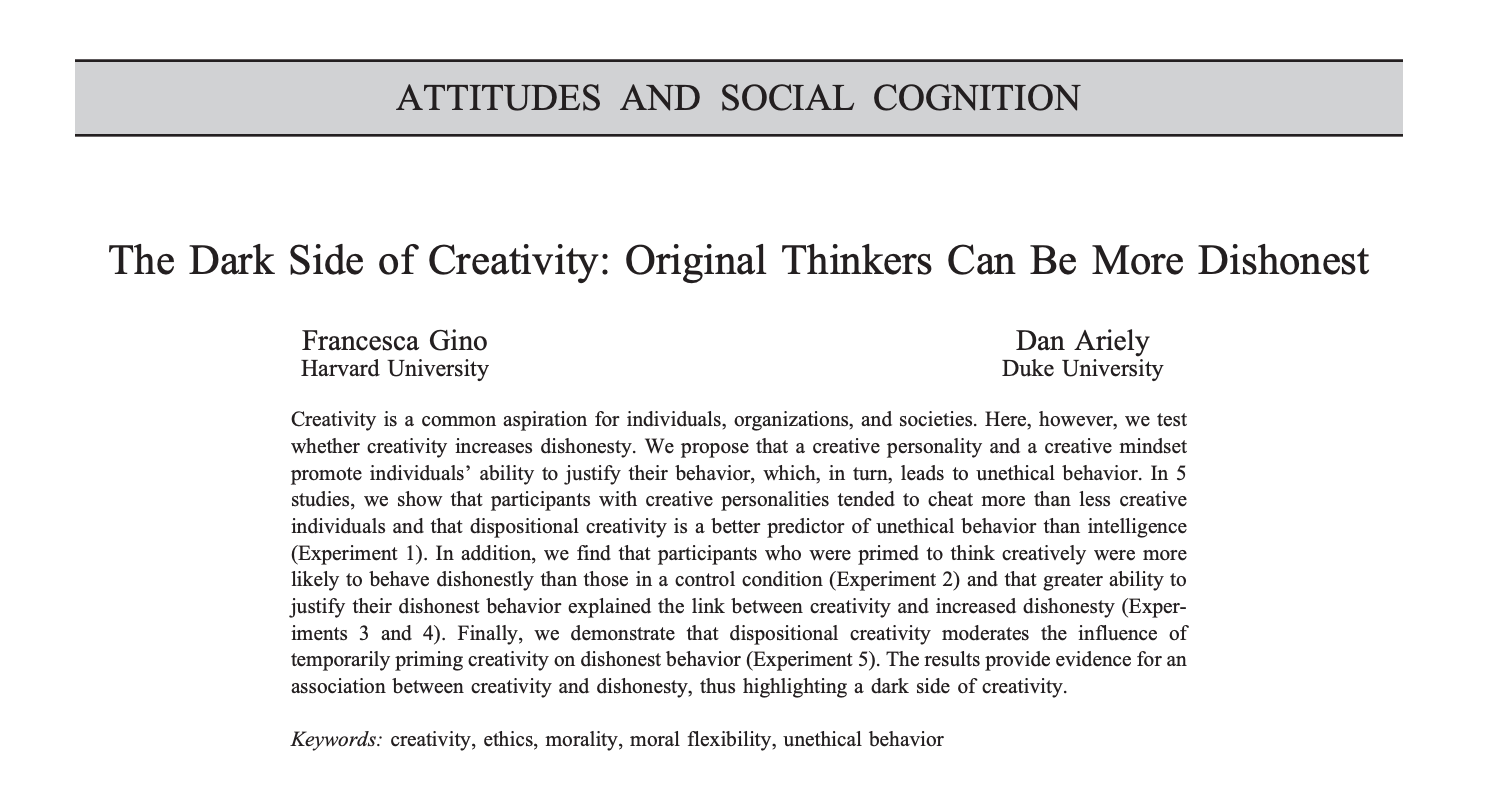
I also recently read a paper studying the so-called dark side of creativity, which is the personality at which this book pokes. People can talk themselves into just about anything that serves their own worldview.
So Tortilla Flat felt relevant in that way. The book doesn’t explore much beyond that point, so it lacks a certain depth or texture that Steinbeck’s other works have for me, but I wholeheartedly understand why the lighter touch and parable-type nature was appealing here.
Tortilla Flat vs. Steinbeck’s Others
It was also interesting to think about the men in Tortilla Flat in contrast to the men of Cannery Row. In Cannery Row, the problem is that the boys genuinely have good intentions and just always bungle up the execution with carelessness and a predilection towards chaos. They “mean well,” but need more sense of responsibility and scale.
In Tortilla Flat, the morality is arguably more sinister because the men constantly justify selfish behavior by convincing themselves that their desires are actually in the service of others. There are some mental hoops to jump through, but startlingly: they’re not all that different from the way people make decisions, often working back from desired outcome.
We constantly justify with hindsight bias (a constant curiosity of mine if you read any of my reviews around books like The Hunger Games or McCarthy’s Blood Meridian) and fundamental attribution error all the time.
Prime example: if Pilon did something, it was situational! It was pressure! If Big Joe did something, it was because he was a bad person. So much of our sentiment and reciprocity towards others stems from if you view someone as a “friend” before the action is taken vs. if you view them with suspicion. (Melville’s Benito Cereno novella also plays with this paranoid line, albeit through a pretty racist lens.)
Seeing the way each character would suppress guilt when it arose—wondering, but secretly knowing deep down they weren’t actually doing something for the “right” reasons, was interesting. Behaviorally, we can convince ourselves that just about any path is the right one, without a strong calibration attached to individual actions, if that makes sense.
So I liked some of the concepts discussed in Tortilla Flat, as I often approach this conversation from the other side: from characters who do feel doubt and guilt around their acts of good rather than characters being arguably iffy and pushing themselves further and further into sticky moral reasoning. Sometimes it worked; sometimes it didn’t.
But it goes to show that black-and-white isn’t obvious to everyone, even in the moment, so I appreciated Tortilla Flat‘s playful examination of that relativism.
I think Cannery Row is more vivid and feels remarkably similar on a surface level, but Tortilla Flat would still be a good pick if you love it or Steinbeck in general. I almost do think it could have been trimmed down to a short story, but the chain of events is partly what makes it so absurd. You notice a pattern in how the men construct their ideas of responsibility, and the book does revolve around this reluctance to “owe” anyone—even a sense of personal accountability for one’s own actions. That lightness vs. weight balance is clear and well-handled, and that’s an existentialist conflict I often revolve around in similar books: pure, plain ol’ fear of commitment and what that does to us. The men in this also would do just about anything for a bottle of wine.
I’m excited for my next Steinbeck but—like I said, I’m rationing.
For fans of:
The Unbearable Lightness of Being by Milan Kundera; Cannery Row by John Steinbeck; One Hundred Years of Solitude by Gabriel García Márquez; Fran Lebowitz, maybe?; The Count of Monte Cristo by Alexandre Dumas.
More From Words Like Silver
If you enjoyed this review, you might also like:


Browse the full Words Like Silver archive on Substack here.

There is absolutely nothing I would love more than to be able to devote more time and energy to Words Like Silver, which has remained a one-person effort since age 13. If my work makes a difference to you, I’d love if you’d consider becoming a subscriber or upgrading your subscription below. You can also make a one-time donation on my website or purchase a book for my library. Anything makes such a massive difference, and I appreciate the support more than you can imagine.
Banger of a line, honestly.
This review convinced me to be on the lookout for this book. I've only ever read East of Eden and while I thought that was beautiful I read it too long ago (I was a baby, too) and now have to reread it. But this Tortilla Flat sounds like something I need to read first because ... You're persuasive.