
Sharp Objects is a Southern Gothic mystery centering family dysfunction.
And it's—dare I say—sharp.

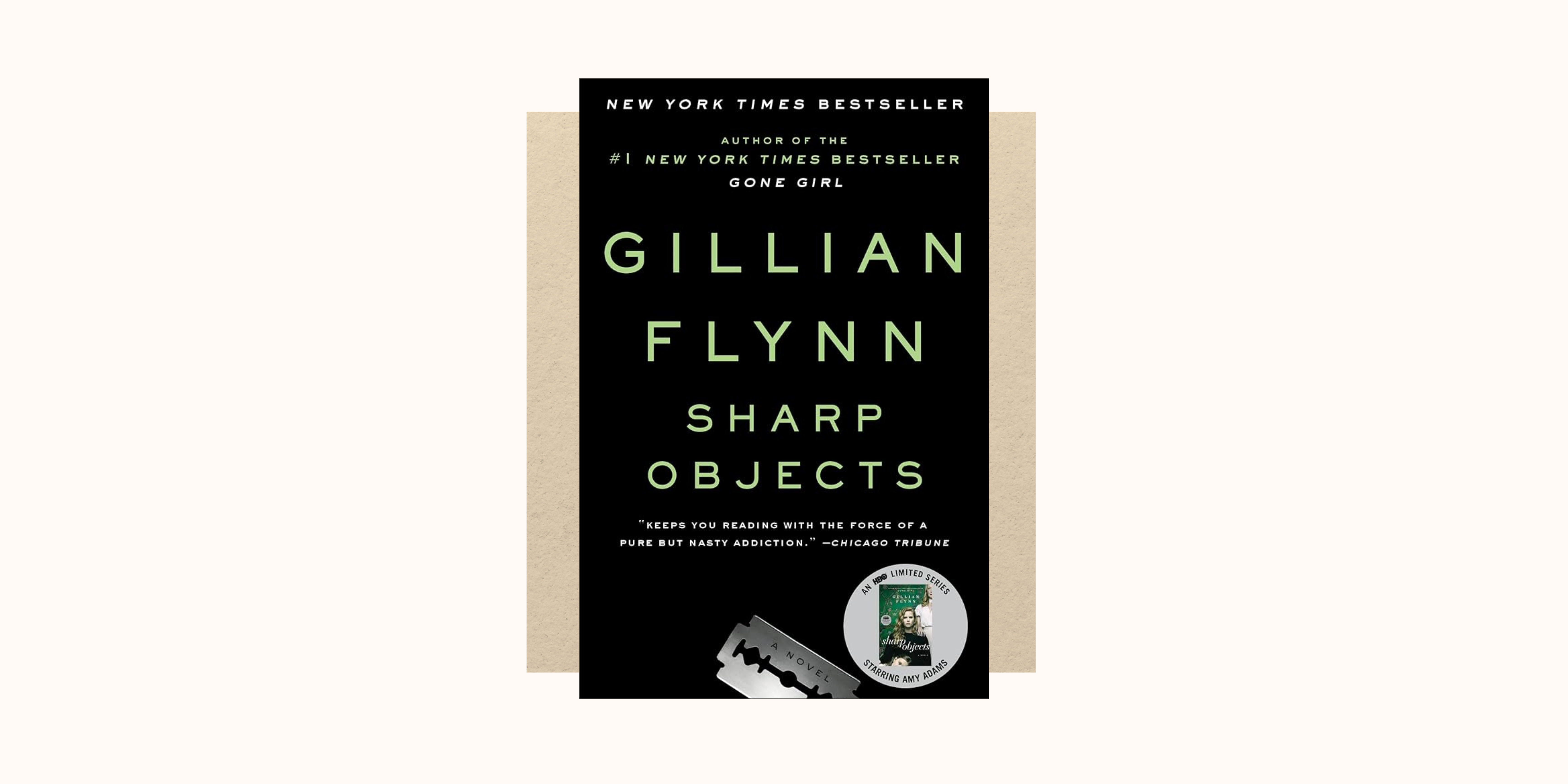
Book: Sharp Objects by Gillian Flynn
Release Date: January 2007
Publisher: Crown
Format: eBook
Source: Library

Fresh from a brief stay at a psych hospital, reporter Camille Preaker faces a troubling assignment: she must return to her tiny hometown to cover the murders of two preteen girls. For years, Camille has hardly spoken to her neurotic, hypochondriac mother or to the half-sister she barely knows: a beautiful thirteen-year-old with an eerie grip on the town.
Now, installed in her old bedroom in her family's Victorian mansion, Camille finds herself identifying with the young victims—a bit too strongly. Dogged by her own demons, she must unravel the psychological puzzle of her own past if she wants to get the story—and survive this homecoming.
Why I Picked It Up
I picked this one up for a few reasons, each intersecting this past week:
There’s a song I love in my book revision playlist, “plus tôt”, that I discovered when walking in on someone playing the finale episode of the HBO adaptation of Sharp Objects, and it came on yesterday,
I’ve been reading a few Southern Gothics—In Cold Blood, When the Bones Sing, etc.—that take place in Missouri or are otherwise Midwestern-adjacent,
I’ve read a couple more books in this vein: a grizzled, distant journalist or cop undergoing an investigation that surfaces family mystery, so I’m calibrated for that sort of cynical tone at the moment.
When I heard the song again, I was reminded I’d never actually gotten around to the book—and I wanted something punchy and immersive and twisty, so a highly-hyped mystery would be up my alley.
About the Book
Sharp Objects is Gillian Flynn’s debut, although most know her for the shattering success of Gone Girl. Over the last year, I’ve also heard a good number of people reference this book as being Southern Gothic, hence my own interest in it.1
The book starts out with Camille admitting she’s not a great reporter, but her (kind) boss Curry keeps her around because he knows she’s had a hard time. Windy Gap, her hometown, isn’t good for her, but he promises to yank her out if it gets to her; the opportunity to scoop a buzzy story, and follow the blueprint of another local paper that won a Pulitzer for similar reporting, is too tempting for the paper.
When Camille arrives, she starts falling into old habits as she scopes out the mystery of Natalie, the latest girl to go missing. Her mom is emotionally distant but also strangely suffocating; her half-sister is a bully. Partway through the book, we learn why the family’s shaped the way it is, from the bloody multi-million dollar pig farm that keeps it rolling in fortune to the reason why Camille’s been a cutter her entire life.
While the reveals are slow and steady, unfurling over discoveries—so I don’t want to unpack too much family history, as a lot of the pleasure is in clicking together the slow pieces—they are engaging. The pacing is gradual but compelling, and Camille’s despair reminded me a lot of dark protagonists like Andi from Revolution or even Yesteryear by Caro Claire Burke: bitter and self-destructive, in too deep to be able to restart.
Admittedly, I knew the ending before going in, so that colors my ability to determine whether the mystery itself was predictable. I was never surprised by how the pieces came together, and stand behind my guess that I would have figured out the culprit even without it being spoiled for me; however, the intrigue of Sharp Objects is more about Camille and the town’s fabric than—solely—the murders. You want to know why Camille is so messed up and how she’s going to yank herself out of it.
She’s trying, but at the same time—she’s padding her stories, she’s drinking (constantly) so you quickly learn she’s an alcoholic, and her high school stories have a dismissive, shocking bent that show she’s been punishing herself for a long time.
At the end, I found some pieces of the mystery—most specifically related to the murders—to require a good bit of suspension of disbelief to force the thematic points of the narrative.2 There’s a dash of deus ex machina but it’s good enough through then not to matter.
Still, I enjoyed the story and found the way it narrowed in over time to be addictive. I didn’t want to put it down, and inhaled most of it in one night—which is usually what I’m looking for in a mystery. I see how its blunt, edgy tone makes it catnip for adaptation and widespread appeal, and Gillian Flynn is simply great at this kind of plot. Sharp Objects sets the tone for her later works well.
Voice & Tone
On that note, Sharp Objects feels dark. It does an excellent job fleshing out (in my opinion) the why behind Camille’s cutting—alluring, horrifying, etc. (I maybe wouldn’t read if you struggle with self-harm.) The moments in which the urge pops up—and what her skin buzzes in response to, for example—are mapped in a way that seems psychologically sound and not gimmicky.
On a line level, I personally loved how the structure of how the cutting was set up (having carved specific words into her skin) could flare depending on what she was dealing with; she’d remember a specific word on her hip that tied in with the given moment, which struck me as an elegant way to paint a picture of her given emotional situation at any point.
Camille mostly keeps to herself, but her thoughts have some real darkness in them; she’s quick to tip over into lines and moments of self-hatred and confusion, exacerbated by her complicated relationship with her hometown and mother.
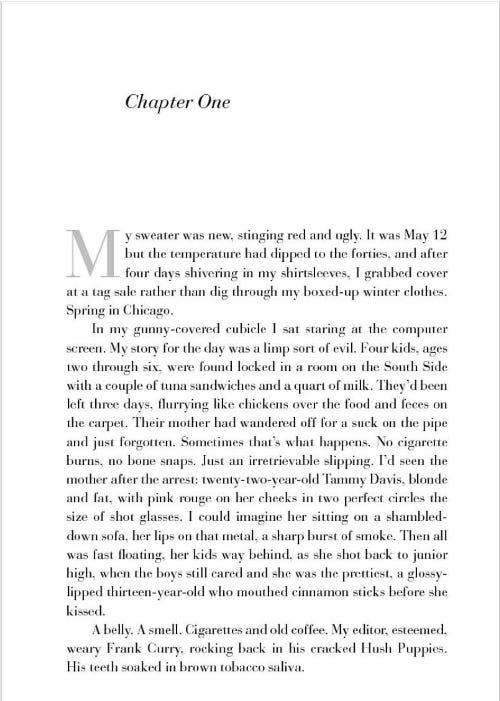
I always pay attention to the types of descriptions an author uses because the crutch words and details can illustrate tone so precisely. For Flynn, she might describe feeble gas station light, a seedy motel, a kid wiping his nose—ugly-ish details that portray the ragged feeling of the narrative itself. There are some great one liners in there too.
“Curry’s office is bland and institutional, like the rest of the building. You could debate journalism or get a Pap smear. No one cared.”
“An air freshener plugged into a nearby outlet hissed out a plastic smell meant to remind me of country breezes.”
“Every tragedy that happens in the world happens to my mother, and this more than anything turns my stomach.”
On the Southern Gothic side, the houses lack AC, even when wealthy; there's watery iced tea, and plenty of bourbon. Lukewarm baths? Pay phones, "rocky" coughs, sweating through her long sleeves.
“She was like a girl's very best doll, the kind you don't play with. She was wearing a long, pink cotton dress with little white slippers. She was twirling her amaretto sour without spilling a drop.”
Tonally, the book also liked to end chapters on disturbing one-line images that reminded me of edgy literary short stories, to various effect.3
There’s a sense of lost childhood running through the book for various reasons, some of which align to the Southern Gothic genre too, but if anything, Sharp Objects fits with this girlhood/rage/sexual/violence/consumption thread that ran parallel to some 2023-ish properties—like Yellowjackets (TV), Kill Creatures, The Lamb. Maybe even a little bit of Stephen King’s Carrie? It’s not particularly my style, but I can identify and appreciate the flavor and what it does, even when finding certain lines too heavy-handed like:
“Sometimes I think illness sits inside every woman, waiting for the right moment to bloom. I have known so many sick women all my life. Women with chronic pain, with ever-gestating diseases. Women with conditions. Men, sure, they have bone snaps, they have backaches, they have a surgery or two, yank out a tonsil, insert a shiny plastic hip. Women get consumed.”
Flynn was roughly fifteen years ahead of her time in that thread.
Towards the end, I loved how elegantly Flynn was able to tie the characterization to the childhood trauma, however; I thought she did a phenomenal job explaining why or how someone developed a certain way in response to specific treatment. There are also plenty of lines that display worldview and evolution quickly and efficiently without trying too hard, like at one point when Camille calls her mother’s grief a hobby. That’s my favorite kind of line sometimes because—does it say more about Camille or her mother?
There’s one line at the end I absolutely loved, but it’s too much of a spoiler for me to quote; it just perfectly describes the entire book in nine words, distilling it. I feel similarly about that line as I do about the ending of Emily Fridlund’s History of Wolves, which is also a very similar book. It built to a point.
My favorite part of the book—beyond the atmosphere skillfully narrowing in on Camille’s headspace, however bleak it could be—was her relationship with her boss, Curry. Camille grappled with how much of her instinct and self-wiring was for the right reasons—secretly manipulative, or kind? being an example4—and Curry was unconditionally caring in the way that she needed. Those moments of warmth likely balanced out the book in a way that it needed; if not for those glimmers of hope, Sharp Objects could have felt far too bitter.
Overall Thoughts
I really enjoyed the unfurling mystery of Sharp Objects and how smoothly it layered in toxic family dynamics. The plot itself is intriguing when you’re in the mood for a small-town murder investigation, and more of a backdrop for the sisters and mother silently imploding. Tracing back from the outcome to each detail feels obvious and clear, which to me was a sign of great characterization, even if some plot was shoehorned for convenience. The book is plenty elegant, and well-packaged.
And, as expected, I did love the precision of this particular flavor of Southern Gothic, even though my usual is more romantic. Worth the read for me. I may have to watch the show at some point.
For fans of:
Long Bright River by Liz Moore; Mare of Easttown (TV); Revolution by Jennifer Donnelly; Girl in Pieces by Kathleen Glasgow; Bleed Like Me by Christa Desir; History of Wolves by Emily Fridlund; Yesteryear by Caro Claire Burke.
More From Words Like Silver
If you enjoyed this review, you might also like:


Browse the full Words Like Silver archive on Substack here.

There is absolutely nothing I would love more than to be able to devote more time and energy to Words Like Silver, which has remained a one-person effort since age 13. If my work makes a difference to you, I’d love if you’d consider becoming a subscriber or upgrading your subscription below. You can also make a one-time donation on my website or purchase a book for my library. Anything makes such a massive difference, and I appreciate the support more than you can imagine.
My debut novel is a Southern Gothic, so I try to constantly develop and complicate my understanding of the genre.
If you’d like to read my thoughts on spoilers, I have a spoiler tag built into my blog that allows you to click on the blacked-out text if you’ve read it already! My personal way of “book clubbing.” Unfortunately, Substack doesn’t have that feature so I don’t want to spoil specifics for others.
Another book club moment here that’s on the blog but not transferred over due to spoilers.
A theme I think of frequently, especially for characters with complicated childhoods. This book did a stunning job dancing around that line without easy answers.